During slow steaming, cold corrosion attacks cylinder liners and piston rings in the form of sulphuric acid. The effect becomes steadily more damaging as the surface of the piston rings loses integri and, as a result, particles are emitted that cause severe abrasion of the rings and liners.
As a consequence, the probabili of adhesive wear (scuffing) is considerably increased.
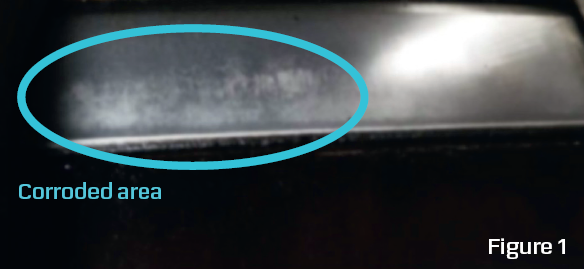
Vessel: M/V H/A Ring pack: 8,429 hours Engine: 8,429 hours Cylinder oil feed rate 1.05g/kWh 70 BN standard cylinder oil Fuel S = 2.9% Average engine load = 35%
For maximum effectiveness, the surface of the piston ring should be hard and “chemically inert”. However, during slow steaming operation it is likely to become both weakened and activated. Figure 1 below shows an example of a corroded top piston ring damaged by sulphuric acid (the whitened areas).
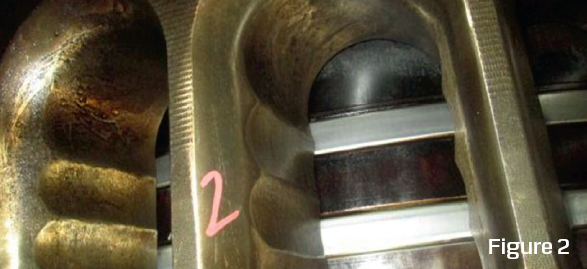
With the lowest feed rate, the Blending-on-Board Variable BN cylinder oil enables you to preserve the integri of your piston ring’s surface against acid attacks and eliminate the effects of cold corrosion (figure 2).
Vessel: M/V Maersk Tanjong Ring pack: 15,329 hours Engine: 40,455 hours Cylinder oil feed rate 0.85g/kWh 95 BN Blending on Board cylinder oil Fuel S = 3.26% Average engine load = 26%
Liner Corrosion Prevention
- comparison of two 12RT-Flex96C-B Engines
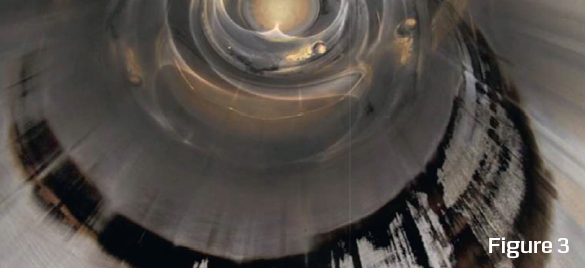
Cold corrosion is distinguished by the appearance of black patches on the cylinder liner, as seen in figure 3. e black patches are a combination of cold corrosion creating an active and spongy surface on the liner wall and a lack of additives in the cylinder lubricant. Without these additives, the lubricant is unable to neutralize the acid and remove the carbonaceous deposits.
Vessel: M/V B. E Ring pack: 2,257 hours Cylinder liner: 6,000 hours Engine: 6,000 hours Cylinder oil feed rate 1.05 g/kWh 70 BN standard cylinder oil Fuel S = 3.1% Average engine load = 35%
The SEA-Mate®
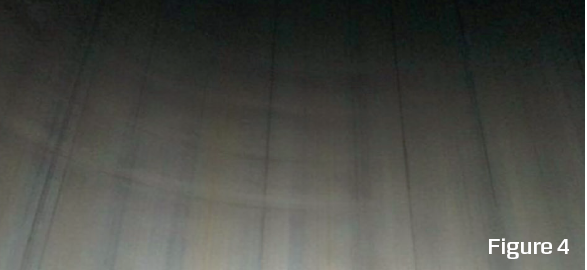
Blending-on-Board lubrication system adjusts the additive dosage in the cylinder oil according to the engine’s needs. In this way, the variable BN cylinder oil Blended-on-Board is able to prevent the total depletion of the cylinder lubricant and thereby eliminate risk of damage from severe cold corrosion, as shown in figure 4.
Vessel: M/V Maersk Tanjong Ring pack: 2,994 hours Cylinder liner: 40,455 hours Engine: 40,455 hours Cylinder oil feed rate 0.85g/kWh 95 BN Blending on Board cylinder oil Fuel S = 3.26% Average engine load = 26%
Piston Ring Cold Corrosion
Wear Prevention
– using SEA-Mate® Variable BN Blending
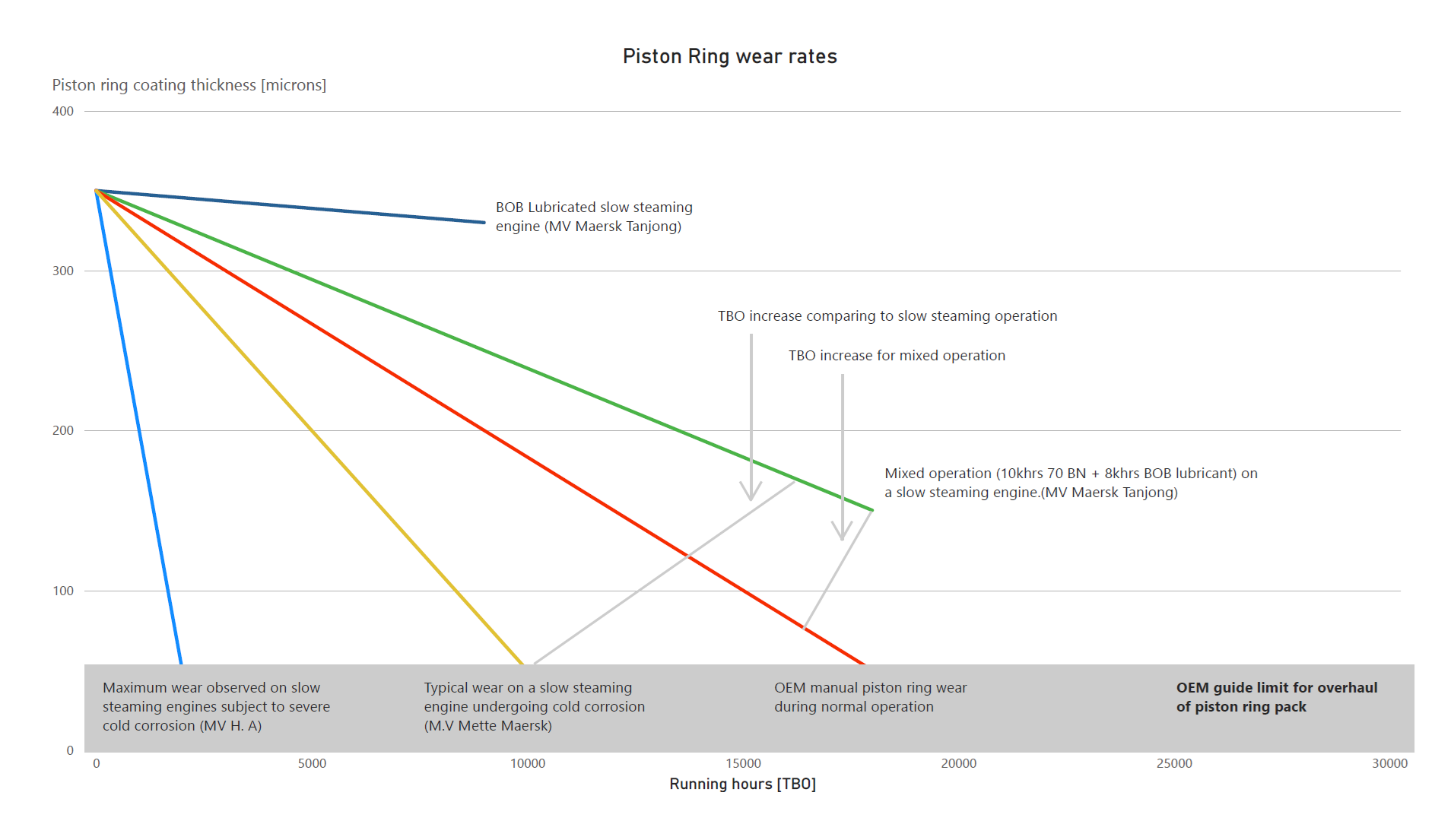
After the onset of cold corrosion, using a standard fixed BN cylinder oil will only lead to faster and more aggressive degeneration. For piston rings, such excessive wear dramati- cally reduces the time-between-overhaul (TBO) of the ring pack. Graph 1 illustrates this development, highlighted by the purple and orange lines.
The fit-for-purpose BOB Variable BN cylinder oil effectively neutralizes the sulphuric acid and thereby increases the TBO of the ring pack, even in extremely corrosive conditions. is was demonstrated on vessels with RT-Flex engines, outlined by the red and green line in the graph. e same results of the BOB lubricant system also apply for similar conditions in MAN ME and MC engines.
Piston Ring Cold Corrosion
– BOB Lubricant Impact on Reliabili
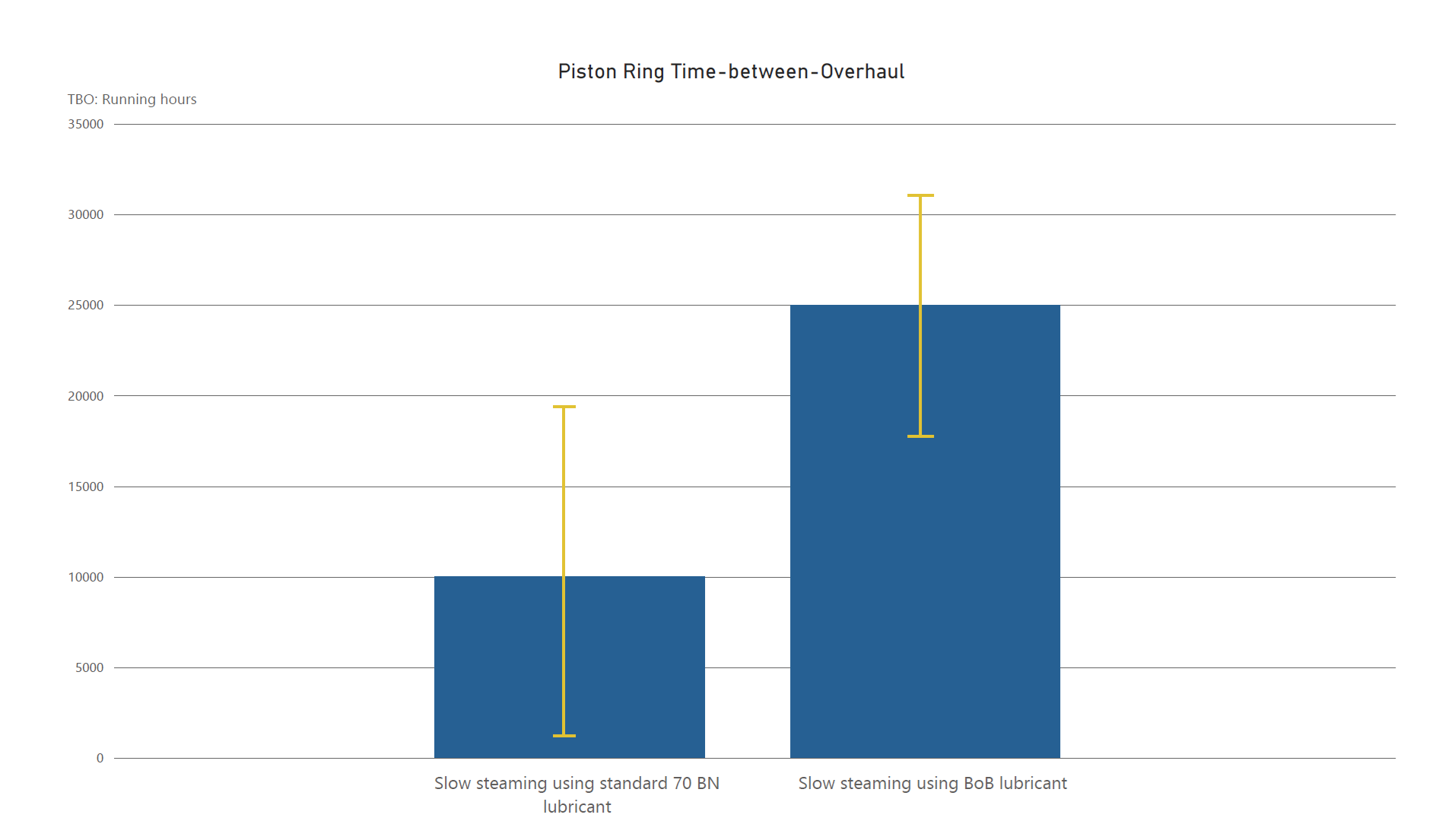
When using 70 BN standard cylinder oil during slow steaming, the wear rate of the ring pack and the liner is typically reduced and the TBO of the cylinder unit (ring pack overhaul) can be as low as 2,000 hours (see graph 2). However, the BOB Variable BN cylinder oil allows the TBO to reach at least the recom-mended OEM levels – and in most cases can be as high as 30,000 hours.
Similarly, in cold corrosion conditions, the TBO of the cylinder liners are reduced from 70,000 hours to approximately 40,000 hours.
Cylinder Oil Feed Rate Optimization
– using the SEA-Mate®
BOB lubrication System
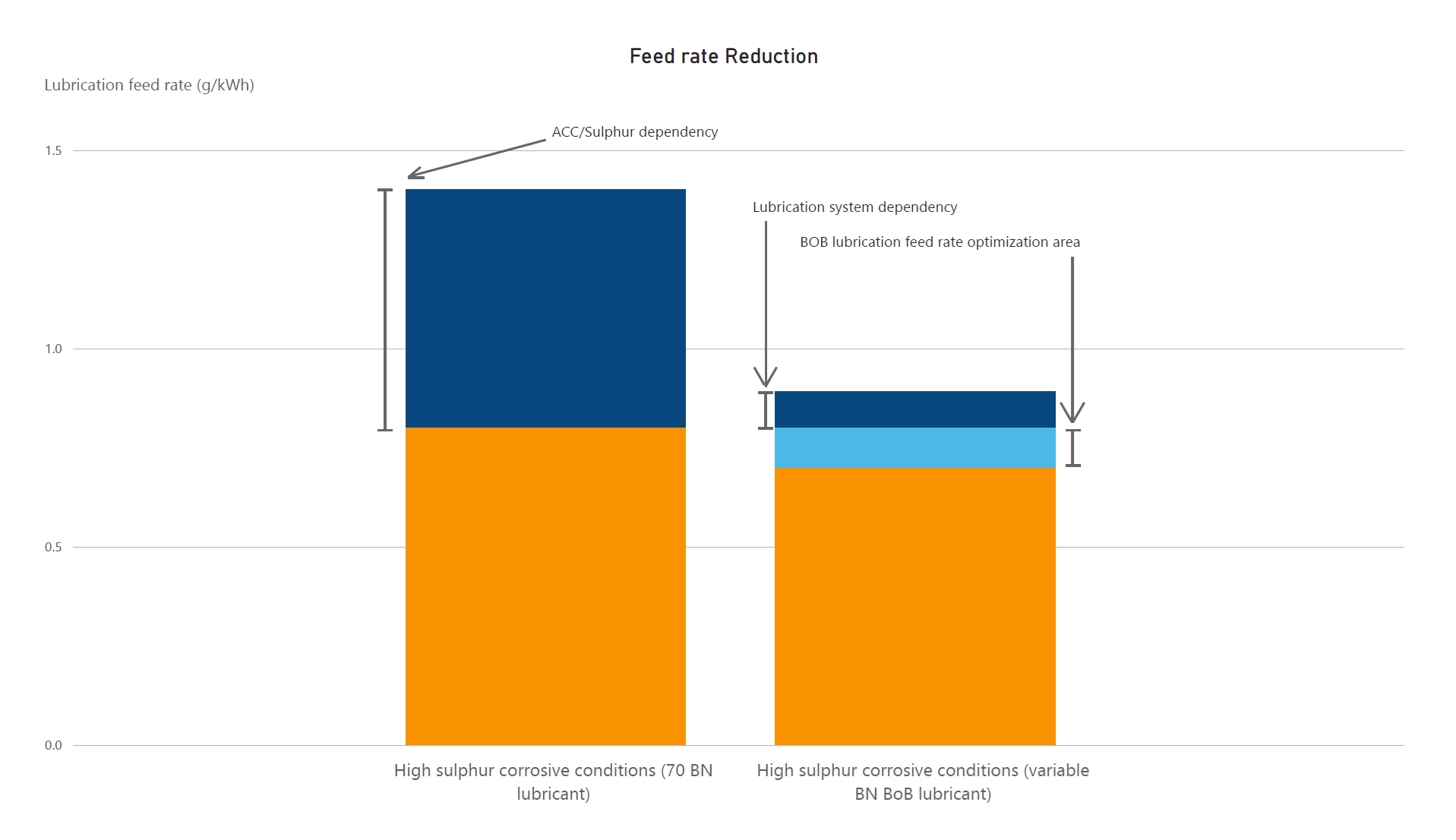
e use of BOB Variable BN “fit-for-Purpose” cylinder oil enables the operator to use the recommended OEM minimum feed rate with no need to compensate for sulphur (which is necessary when using standard cylinder oils). Consequently, cylinder oil consumption is pically decreased by as much as 25-40%.
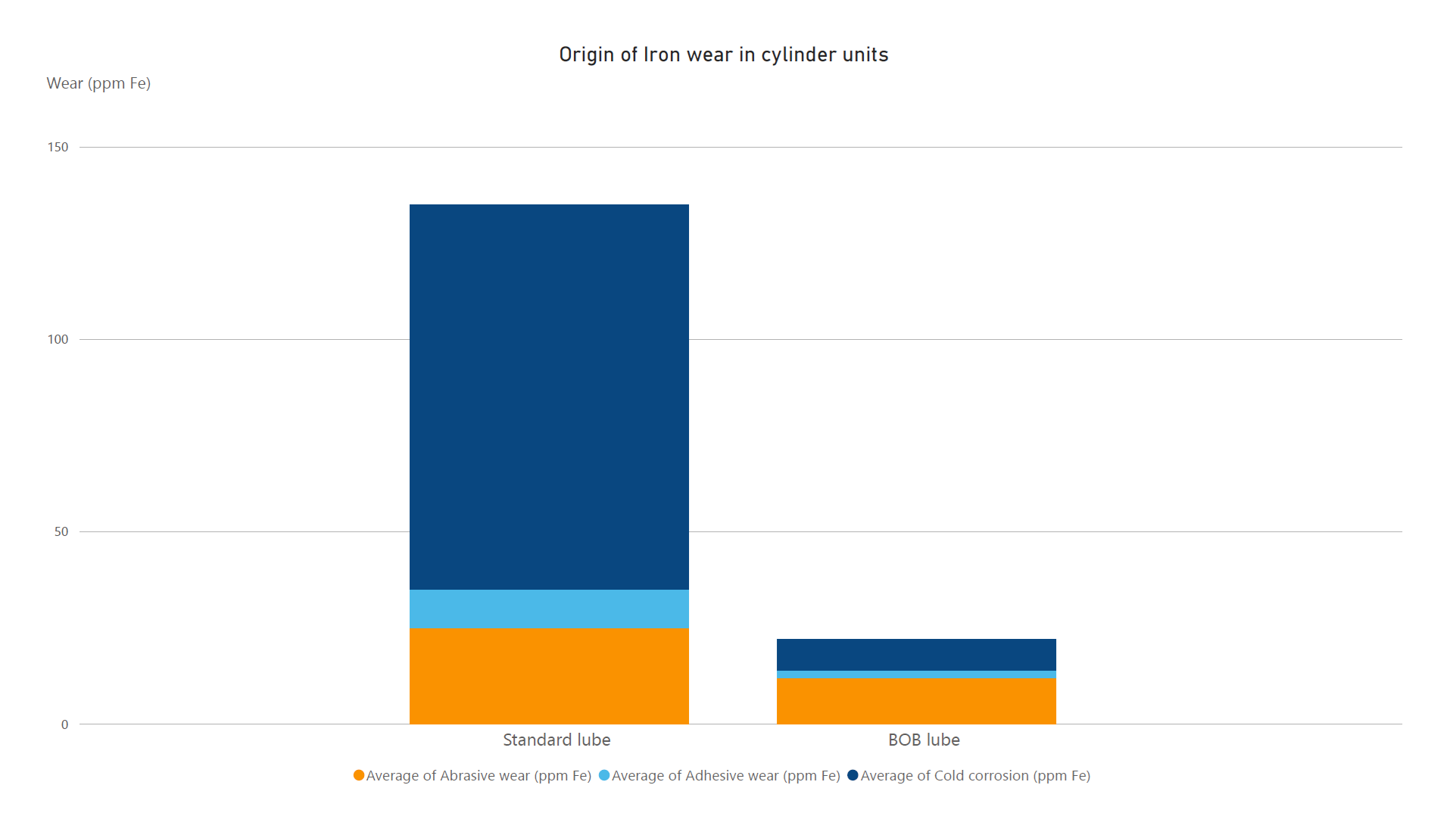
Cylinder Wear-pe Proportions
The effectiveness of BOB Variable BN “fit-for-Purpose” cylinder oil is highlighted in the graph below. In particular it demonstrates how cold corrosion wear can be prevented using the SEA-Mate® BOB lubrication system and contributes to minimizing the overall wear process.
The BOB cylinder oil also contains anti-wear additives that directly reduce abrasive and adhesive wear.
Conclusion
As the figures and graphs show, the adjustable BN cylinder oil Blended-on-Board gives a drastic overall reduction in cold corrosion wear.
This information was validated and confirmed over 1 million operating hours on board vessels, numerous OEM inspections and laboratory tests. The findings are crucial for vessel owners seeking to optimize engine performance and reduce operating costs.
The improved TBO results are achieved by improving the balance of BN and sulphuric acid, and by optimizing lubrication feed rates.
By improving the integri and performance of piston rings, cylinder liner conditions and lubrication management, users can reduce the lubrication-related Total Cost of Ownership by 25-40%.
The conclusions made on board vessels fitted with RT-Flex engines are similar to those with MAN ME and MC engines. Consequently, the SEA-Mate® Blending-on-Board lubrication system provides similar results and benefits when used with both engine pes.